
All content categorized with: Uncategorized
Filter
Post List

Restricting Mandatory Arbitration Agreements in Sexual Harassment Cases
In the United States, over sixty million employees are subject to mandatory arbitration agreements as a condition of employment.1Alexander J.S. Colvin, The Growing Use of Mandatory Arbitration: Access to the Courts is Now Barred For More Than 60 Million American Workers,…Prescription Restriction: Why Birth Control Must Be Over-the-Counter in the United States
This Note argues that it is harmful and unnecessary to require women to obtain prescriptions for access to hormonal birth control. Requiring a prescription is necessarily a barrier to access which hurts women and hamstrings the ability to dictate their own reproductive plans. It is also an irrational regulation in light of the relative safety of hormonal birth control pills, particularly progestin-only formulations, compared to other drugs readily available on the shelves. Leading medical organizations, including the American College of Obstetrics and Gynecologists, advocate for over-the-counter access to hormonal birth control. While acknowledging that not every woman will have positive outcomes taking hormonal birth control pills, this Note argues that women are capable of taking hormonal birth control as directed and are able to self-identify if they themselves are at risk for complications. Following a long line of cases that establish reproduction as a fundamental right in the United States, it follows that requiring a prescription for access can and should be analyzed under the Fifth and Fourteenth Amendment Due Process clauses, particularly under the Undue Burden standard. Certain prerequisites, such as pelvic exams, once thought to be necessary to safely prescribe hormonal birth control, are now widely considered unnecessary in determining whether a particular woman can safely take birth control pills. This Note goes further and argues that such prerequisites are an unconstitutional method of holding vital medication hostage from women who desire to control their reproductive health.Matter of A-B- and the Rejection of Refugees from Domestic Violence
In June 2018, then Attorney General Jeff Sessions released the controversial asylum decision Matter of A-B-.1A-B-, 27 I&N Dec. 316 (A.G. 2018); see also Katie Benner & Caitlin Dickerson, Sessions Says Domestic and Gang Violence Are Not Grounds for Asylum, N.Y.No Status, No Hope: Women Refugees in Israel
Women refugees are one of the most marginalized populations in the world. As with all asylum seekers, women refugees face persecution both in their home country and their host country because of their status and identity. The situation is even worse in Israel, which continues to deny refugee status to…

Title IX Lawsuits as a Strategy for Integrating Fraternities
In February, three undergraduate women attending Yale filed a class-action lawsuit in federal court requesting a court order that Yale-affiliated fraternities allow women to join. The plaintiffs allege that the exclusively male fraternities create a hostile environment on campus for women and that, by excluding women, only men can…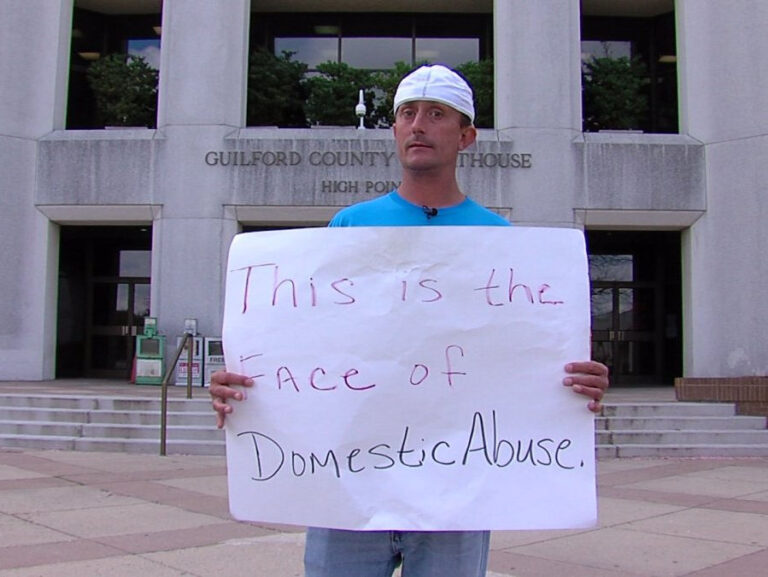
Shame Punishments for Perpetrators of Domestic Violence
In a surprising trend, judges in the late 1990s increasingly issued “shame sanctions,” punishments which cause a person to feel lessor in relation to other members of society.1See Toni M. Massaro, Shame, Culture, and American Criminal Law, 89 Mich. L. Rev.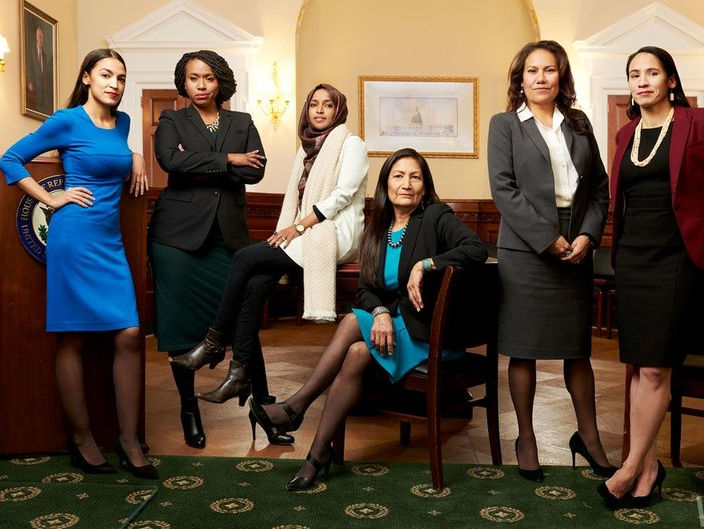
We Aren’t Going Anywhere: Broadening Perspectives from 1992 to 2019
It’s probably no coincidence that the Michigan Journal of Gender and Law was founded in 1992—a year coined as “The Year of the Woman.” It was in 1992 that the nation watched uncomfortably as Professor Anita Hill confronted patriarchy in its ugliest form—forced to testify to a wall of judgmental,…“Stealthing” is Sexual Assault, Let’s Start Saying it in Court
“Stealthing,” the act of non-consensually removing one’s condom during sex, came to my attention in 2017 when the issue went viral in the online-feminist space. The fact that this act has a name immediately signaled to me its grotesque ubiquity. More than just an assaultive practice, stealthing is a community.Contracting Around Gender Constructs: Transgender Men at Women’s Colleges
As the transgender community gains increasing visibility in society, women’s colleges have begun to address new questions about who is eligible to attend. One such question is whether students who come out as transgender men after matriculation are eligible to remain enrolled and graduate from these institutions. The main claims relevant to this discussion are (1) colleges’ right to retain their identity as all-women’s institutions; (2) the parallel rights of cisgender female students who explicitly choose to attend an all-women’s institution, and (3) transgender students’ competing right to avoid arbitrary or capricious dismissal based on gender identity. This Note posits that contract law provides a useful framework for colleges to evaluate this question since both express and implied contracts form the basis of the student- college relationship. Ultimately, this Note argues that, although solutions that satisfy all parties are impossible, harms can be minimized if transgender students are permitted to graduate and given appropriate support throughout the transition process, and other policies are adapted to address the concerns of cisgender female students.Properly Accounting for Domestic Violence in Child Custody Cases: An Evidence-Based Analysis and Reform Proposal
Promoting the best interests of children and protecting their safety and well-being in the context of a divorce or parentage case where domestic violence has been alleged has become highly politicized and highly gendered. There are claims by fathers’ rights groups that mothers often falsely accuse fathers of domestic violence to alienate the fathers from their children and to improve their financial position. They also claim that children do better when fathers are equally involved in their children’s lives, but that judges favor mothers over fathers in custody cases. As a consequence, fathers’ rights groups have engaged in a nationwide effort to reform the custody laws to create a presumption of equal parenting time, with no exception when one of the parents has engaged in domestic violence. Domestic violence survivors and their advocates, however, claim that the needs of survivors of domestic violence and their children to be safe and free from further abuse are not being met in custody cases, that their claims of abuse are not being believed, and that the harm when a parent commits domestic violence against the other parent is not being recognized and addressed by judges and the family law professional upon whom they rely. This Article first presents a literature review, with articulated scientific standards applied to each of the pieces of research cited in this review, on what is happening outside of court and in court relating to domestic violence and best practices for taking domestic violence into account in these child custody cases. Among the key findings from this literature review are: (1) when a parent commits domestic violence against the other parent, this can cause serious long-term harm to children, (2) custody judgments tend to favor fathers over mothers because greater weight is placed on claims of alienation than on domestic violence claims, (3) long-term harms can be mitigated by evidence-based best practices, most notably, supporting non-abusive parents in their efforts to protect themselves and their children from further domestic violence, (4) family law judges and professionals must be trained on domestic violence and its nuances, as well as how to screen for domestic violence, to adequately support them, and (5) a component of this training is learning how to distinguish mutual “situational couple violence” for which “parallel parenting” custody arrangements might be feasible, from a pattern of “coercive abuse,” where sole decision-making and primary parenting time should be ordered to the non-abusive parent, and protective restrictions on parenting time should be ordered to the abusive parent. The Article then reports on a fifty-state review of custody-related laws (laws determining which parent makes major decisions relating to the child, who is allocated primary parenting time, and whether protective restrictions shall be placed on the parenting time of a parent who has engaged in domestic violence). This review found serious gaps between what evidence-based best practices suggest, and what is currently required by law in many states. These gaps in the law, including the failure of the law to require domestic violence screening and training for judges and other family law professionals, contribute to poor custody decision-making by them that compromises the safety and welfare of domestic violence survivors and their children. The Article then proposes nuanced law reforms that would align custody-related laws with evidence-based best practices for taking domestic violence into account in custody cases, including creating rebuttable presumptions, burdens of proof, and definitions of domestic violence that conform with these evidence-based best practices.